
Om Publications
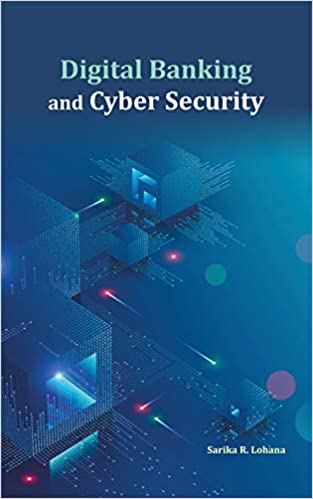
Digital Banking and Cyber Security (Hardback)
Sarika R Lohana
₹859 ₹965 (11% off)
ISBN 13

9788177085167
Year

2020
India has a rich diversity of digital payment options. Due to steps taken by the Reserve Bank of India (RBI) to encourage electronic transactions, paper-based systems (cheque, demand draft, banker’s cheque, payment order, traveller’s cheque, interest warrant, dividend warrants, and money order) now constitute a miniscule portion of retail payments. The number of clearing houses has also declined.
Card-based electronic payment systems are well-understood at the global and national level, and find acceptance at stores, as well as for online payments. Cards are usually issued by banks and can be classified on the basis of their issuance, usage and payment by the card holder. There are three types of cards: (a) pre-paid cards, (b) debit cards and (c) credit cards.
In recent years, non-card electronic payment systems have become very popular. These have, inter alia, included: (a) real time gross settlement (RTGS), (b) national electronic funds transfer (NEFT), (c) electronic clearing services (ECS), (d) immediate payment services (IMPS), (e) unified payments interface (UPI), (f) unstructured supplementary service data (USSD), (g) Aadhaar-enabled payment system (AEPS), and (h) Bharat interface for money (BHIM).
Cyber space is vulnerable to a wide variety of incidents, whether intentional or accidental, man-made or natural, and the data exchanged in the cyber space can be exploited for nefarious purposes by both nation-states and non-state actors.
Cyber attacks and threats are faced by individuals, businesses and governments. These can take the following forms: (a) phishing, (b) hacking, (c) scamming, (d) sniffing, (e) spoofing and (f) denial of service attack.
The only way to protect ourselves from such activities is to be vigilant about our data and protect the data from getting into the hands of scamsters and fraudsters.
This book is an informative and descriptive document on the subject of digital banking and cyber security concerns.
CONTENTS
1. Banking in India: An Introduction
1.1 Transformation of Banking System
1.2 Meaning and Functions of a Commercial Bank
1.3 Classification of Commercial Banks in India
1.4 Legal Framework for Banking Sector in India
1.5 Ownership and Governance of Commercial Banks in India
2. Paper-based Traditional Systems of Payment
2.1 Cheque
2.2 Other Paper-based Instruments of Payment
3. Digital Technology in Banking Sector and India’s Digital Competitiveness
3.1 Significance of Digitization
3.2 Digitization in Banking Sector
3.3 What is Digital Payment?
3.4 Benefits of Digital Payments
3.5 Role of RBI in Promoting Digital Payments
3.6 Data on Payment Systems
3.7 Cashless Transactions: India versus Other Countries
3.8 World Digital Competitiveness Ranking, 2019 and India
4. Electronic Payments (E-payments) and India’s Global Ranking
4.1 What are E-payments?
4.2 Advantages of Electronic Transactions
4.3 E-payment Ranking Survey
5. Card-based Electronic Payment Systems
5.1 Pre-paid Cards
5.2 Debit Cards
5.3 Credit Cards
5.4 How to Use Debit/Credit Cards?
5.5 Benefits of Debit/Credit Cards
5.6 Automated Teller Machines (ATMs)
5.7 Point-of-Sale (PoS) Terminals and Online Transactions
5.8 RuPay
5.9 Business Correspondents (BCs)
5.10 Village Level Entrepreneur (VLE)
5.11 Working Group on Regulatory Mechanism for Cards
6. Non-card Electronic Payment Systems
6.1 Real Time Gross Settlement (RTGS)
6.2 National Electronic Funds Transfer (NEFT)
6.3 Electronic Clearing Services (ECS)
6.4 Immediate Payment Services (IMPS)
6.5 Unified Payments Interface (UPI)
6.6 Unstructured Supplementary Service Data (USSD)
6.7 Aadhaar-enabled Payment System (AEPS)
6.8 Aadhaar Payment Bridge System (APBS)
6.9 Bharat Interface for Money (BHIM)
6.10 BHIM Aadhaar (Only for Merchants)
6.11 Digital Wallet or Electronic Wallet (E-Wallet)
6.12 Electronic Toll Collections
7. Internet Banking
7.1 Internet Banking and Electronic Banking
7.2 Distinctive Features of Internet Banking
7.3 Levels of Banking Services Offered through Internet
7.4 Advantages of Internet Banking
7.5 Internet Banking in India
7.6 Internet Banking and the Reserve Bank of India
7.7 Security and Privacy Risks of Internet Banking
8. Mobile Banking
8.1 Mobile Banking and Financial Inclusion
8.2 Mobile Banking: Regulatory Framework
8.3 Various Channels for Mobile Banking
8.4 Challenges Faced by Banks
8.5 Technical Committee on Mobile Banking
9. Cyber Space, Cyber Attacks and Need for Cyber Security
9.1 What is Cyber Space?
9.2 Forms of Cyber Attacks and Threats
9.3 Data Sought by Scamsters
9.4 Popular Data Collecting Channels Used by Hackers
9.5 Consequences of Cyber Attacks
9.6 Need for Cyber Security
10. Measures to Prevent Cyber Attacks and Threats
10.1 International Convention on Cyber Crimes
10.2 Efforts of Reserve Bank of India (RBI)
10.3 Fraud Management in Electronic Banking
10.4 System Architecture and Design
10.5 Authentication Techniques
10.6 Firewalls
10.7 Cryptography
10.8 Digital Signature and Certification
10.9 Tools
10.10 Digital Forensics
10.11 Cyber Security Audit
10.12 Artificial Intelligence (AI)
11. National Cyber Security Policy (NCSP)
11.1 Objectives of NCSP
11.2 Strategies of NCSP
12. Data Protection Strategies and Technologies
12.1 What is Data Protection?
12.2 Data Protection Strategies
12.3 Data Protection Technologies
12.4 Data Security and Data Privacy
12.5 Need for Data Protection Legislation
12.6 European Union (EU) Data Protection Directive
12.7 Data Protection Act (DPA), 1998 of United Kingdom
12.8 Data Protection Act (DPA), 2018 of United Kingdom
13. FinTech in Banking
Appendix 1: Payment and Settlement Systems in India: RBI’s Vision Document, 2019-21
Appendix 2: Reserve Bank of India: Report of the High-Level Committee on Deepening of Digital Payments
Bibliography
Index