
Om Publications
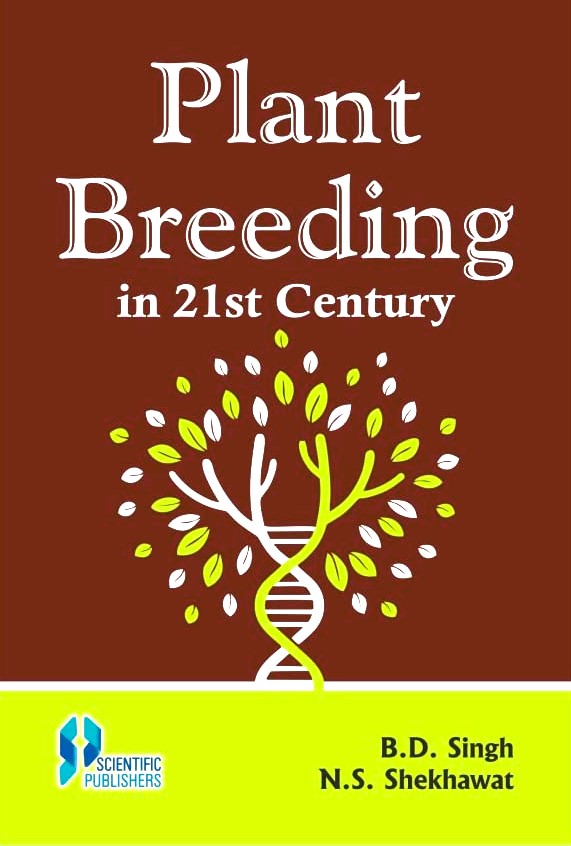
Plant Breeding in 21st Century
B D Singh and N S Shekhawat
₹650 ₹650 (0% off)
ISBN 13

9789389061277
Binding

Softcover
Language

English
Year

2024
CONTENTS: Part A
Basics of Plant Breeding
Preface
1. Introduction
1.1. Introduction to Plant Breeding
1.2. The Growing Food Needs and Declining
Agricultural Resources
1.3. Major Developments
1.4. Activities In Plant Breeding
1.5. Domestication
1.6. Genetic Resources
1.7. Modes of Reproduction
1.8. Qualitative and Quantitative Traits
1.9. Achievements
1.10. Undesirable Consequences of Plant Breeding
1.11. Limitations of Plant Breeding Methods
1.12. Conclusions
PRACTICE QUESTIONS
RELEVANT LITERATURE
2. The Relevance of Genetics and Genomics in Plant Breeding
2.1. Introduction
2.2. Genes and Chromosomes
2.3. Cell Division
2.4. Inheritance of Qualitative Traits
2.5. Inheritance of Quantitative Traits
2.6. Population Genetics
2.7. Cytoplasmic Inheritance
2.8. Molecular Genetics
2.9. Epigenetics
2.10. Genomic Imprinting
2.11. Genome Editing
2.12. Genomic Resources
PRACTICE QUESTIONS
RELEVANT LITERATURE
3. Tools of Plant Breeding
3.1. Introduction
3.2. Introduction to Genetic Resources
3.3. Pollination Control
3.4. Hybridization: Intraspecific and Interspecific
3.5. Heterosis and Inbreeding Depression
3.6. Polyploidy
3.7. Mutation Breeding
3.8. Somaclonal Variation
3.9. Selection
PRACTICE QUESTIONS
RELEVANT LITERATURE
4. Breeding of Self-Pollinated Crops
4.1. Introduction
4.2. Methods of Selection
4.3. Hybridization
4.4. Pedigree Method
4.5. Bulk Method
4.6. Single Seed Descent Method
4.7. Use of Haploids for Rapid Isolation of Homozygous Lines
4.8. Backcross Method
4.9. Multiline Varieties
4.10. Population Breeding Approach
4.11. Rapid Isolation of Homozygous Lines (hybrid Sorting)
4.12. Hybrid Varieties
4.13. Participatory Crop Improvement
4.14. Breeding of Often Cross-pollinated Crops
4.15. Breeding of Asexually Propagated Crops
4.16. Mutation Breeding
4.17. Conclusion
PRACTICE QUESTIONS
RELEVANT LITERATURE
5. Breeding of Cross-Pollinated Crops
5.1. Introduction
5.2. Selection in Cross-pollinated Crops
5.3. Recurrent Selection
5.4. Hybrid Varieties
5.5. Synthetic Varieties
5.7. Achievements With Synthetic and Composite Varieties
5.8. Conclusion
PRACTICE QUESTIONS
RELEVANT LITERATURE
6. Breeding for Biotic Stress Resistance
6.1. Introduction
6.2. Breeding for Disease Resistance
6.3. Breeding For Insect Resistance
6.4. Conclusions
PRACTICE QUESTIONS
RELEVANT LITERATURE
7. Breeding for Resistance to Abiotic Stresses
7.1. Introduction
7.2. Breeding for Drought Resistance
7.3. Breeding for Resistance to Salinity Stress
7.4. Breeding for Salinity Stress Resistance
7.5. Breeding for Resistance to Mineral Stresses
7.6. Breeding for Resistance to Temperature Stress
7.7. Achievements of Breeding for Abiotic Stress Resistance
7.8. Conclusions
PRACTICE QUESTIONS
RELEVANT LITERATURE
8. Breeding for Quality Traits
8.1. Introduction
8.2. Breeding for Nutritional Quality
8.3. Inheritance of Nutritional Quality Traits
8.4. Elimination of Anti-nutritional Factors
8.5. Breeding for Enhanced Vitamin Content
8.6. Protein Content and Quality
8.7. Oil Content and Quality
8.8. Sources for Quality Traits
8.9. Breeding Approaches for Quality Traits
8.10. Limitations of Breeding for Quality
PRACTICE QUESTIONS
RELEVANT LITERATURE
Part B Transgenic Technology
9. The Basic Techniques of Transgenic Technology
9.1. Introduction
9.2. Plant Tissue Culture
9.3. Regeneration of Complete Plantlets
9.4. Recombinant DNA Technology
9.5. Transgenic Plants
9.6. Gene Constructs for Plants
9.7. Marker or Reporter Genes
9.8. Vectors for Plant Transformation
9.9. Genetic Transformation of Plants
9.10. Genetic Transformation of Chloroplasts
9.11. Transgene Integration and Inheritance
PRACTICE QUESTIONS
RELEVANT LITERATURE
10. Transgenic Plants for Resistance to Biotic and Abiotic Stresses
10.1. Introduction
10.2. Objectives of Transgene Expression
10.3. Abiotic and Biotic Stresses
10.4. Herbicide Resistance
10.5. Insect Resistance
10.6. Virus Resistance
10.7. Disease Resistance
10.8. Salinity and Drought Tolerance
10.9. Conclusions
PRACTICE QUESTIONS
RELEVANT LITERATURE
11. Transgenic Plants with modified Quality and other Novel Traits
11.1. Introduction
11.2. Endogenous Gene Suppression
11.3. Slow Fruit Softening Tomato
11.4. Modification of Oil Quality
11.5. Modification of Protein Quality
11.6. Modification of Starch Quality
11.7. Golden Rice
11.8. Male Sterility
11.9. Edible Vaccines
11.10. Biochemical Production
11.11. Crops for Biofuel Production
11.12. Conclusions
PRACTICE QUESTIONS
RELEVANT LITERATURE
12. Biosafety Issues Related to and Adoption of Transgenic Crops
12.1. Introduction
12.2. Potential Benefits From Transgenic Crop Varieties
12.3. GM Crops Approved for Commercial Cultivation
12.4. Adoption of GM Crops By Farmers
12.5. Agronomic Impact of Transgenic Crops
12.6. Economic Benefits from Transgenic Varieties
12.7. Consumer Acceptance of Transgenic Crop Produce
12.8. Social Impact of Transgenic Crops
12.9. Risks From GM Crops
12.10. Regulation of GM Crop Varieties
12.11. Safety of GM Food
12.12. Environmental Risks From GM Crops
12.13. Transgene Dispersal VIA Pollen And DNA
12.14. Issues Relevant to Agriculture
12.15. Conclusions
PRACTICE QUESTIONS
RELEVANT LITERATURE
Part C Molecular Markers
13. Molecular Marker Systems and Trait Phenotyping
13.1. Introduction
13.2. Genetic Markers
13.3. Isolation and Purification of DNA From Plants
13.4. Polymerase Chain Reaction
13.5. Restriction Fragment Length Polymorphism
13.6. Randomly Amplified Polymorphic DNA
13.7. Amplified Fragment Length Polymorphism
13.8. Diversity Array Technology
13.9. Sequence Characterized Amplified Regions
13.10. Simple Sequence Repeat (SSR) Polymorphisms
13.11. Inter-SSR (ISSR) Markers
13.12. Start Codon Targeted Polymorphism
13.13. Single Nucleotide Polymorphism
13.14. Cleaved Amplified Polymorphic Sequences
13.15. Allele-specific PCR
13.16. High Throughput Genotyping
13.17. Trait Phenotyping
13.18. Conclusions
PRACTICE QUESTIONS
RELEVANT LITERATURE
14. Marker-Trait Associations
14.1 Introduction
14.2 Populations for Linkage Mapping
14.3. Populations for Association Mapping
14.4 Some Relevant Facts about Mapping Populations
14.5 Linkage Mapping of Markers and Genes
14.6 Linkage Mapping of QTLS
14.7 Association Mapping
14.8. Conclusions
PRACTICE QUESTIONS
RELEVANT LITERATURE
15. Applications of Molecular Markers in Plant Breeding
15.1. Introduction
15.2. Germplasm Characterization and Conservation
15.3. Diversity and Phylogenetic Analyses
15.4. DNA Fingerprinting
15.5. Evaluation of Genetic Purity of Parental Lines and
Seed Lots
15.6. Positional Cloning of Genes
15.7. Selection of Parents for Hybridization
15.8. Marker-assisted Selection
15.9. Marker-assisted Backcrossing
15.10. QTL Introgression and other issues
15.11. Marker-assisted Recurrent Selection
15.12. Novel Breeding Schemes
15.13. Genomic Selection
15.14. Achievements with MAS
15.15. Advantages of MAS
15.16. Limitations of MAS
15.17. Conclusions
PRACTICE QUESTIONS
RELEVANT LITERATURE
Part D Miscellaneous
16. Variety Release, Seed Multiplication and Intellectual Property Rights
16.1. Introduction
16.2. Release of New Varieties
16.3. Seed Multiplication
16.4. Intellectual Property Rights
16.5. Conclusions
PRACTICE QUESTIONS
FURTHER READINGS
Subject Index
Author Index